





Category:
Project Review Against Covid-19 goes to communities to combat fake news about the pandemic
Published on 14/01/2021 - 19:36 | Updated on 15/01/2021 - 15:05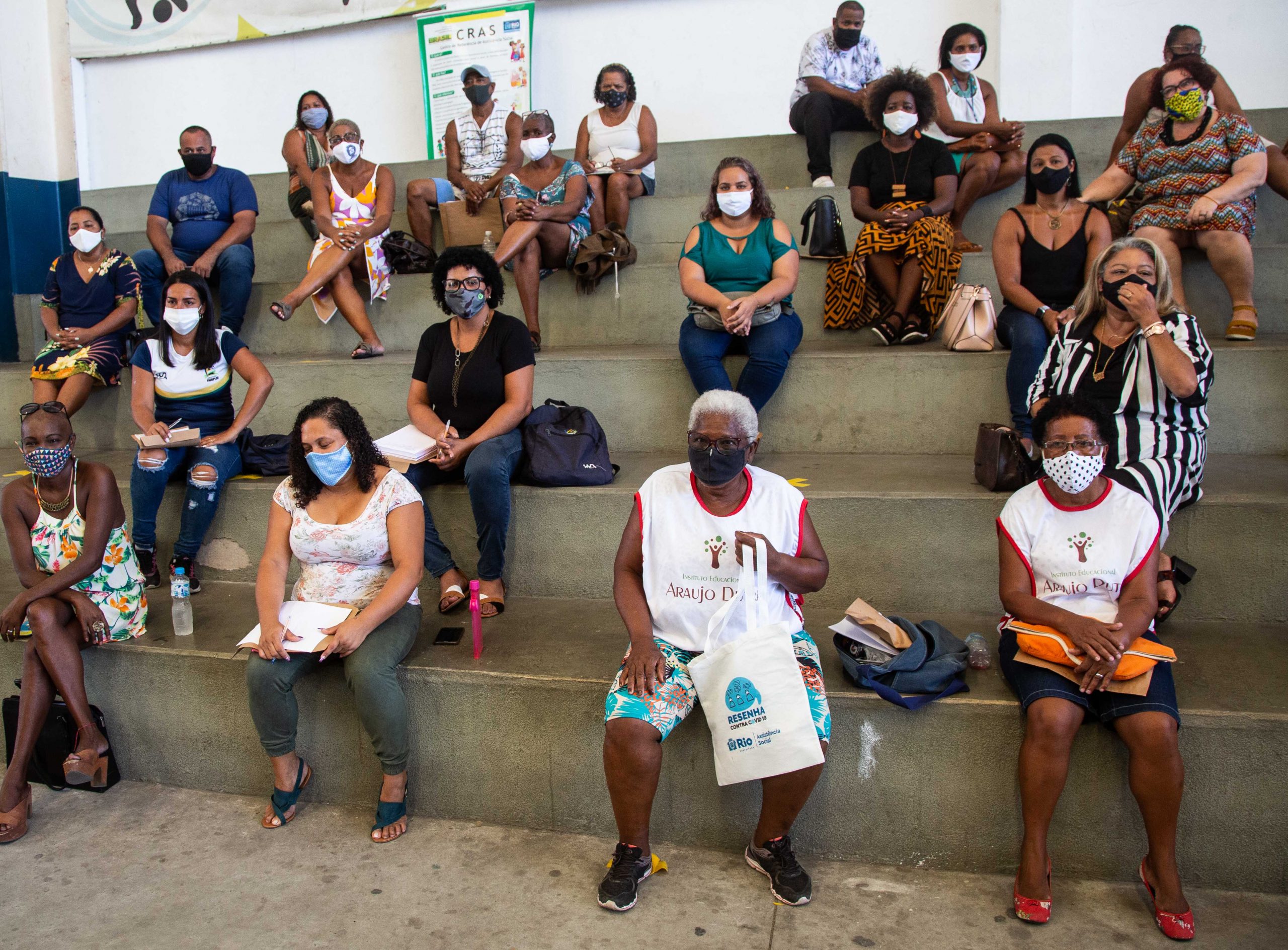 Cariocas participate in meeting on Covid-19 prevention - Fernando Maia / Rio City Hall
The most important conversation is about preventing COVID-19. May you spread the word about how to combat the coronavirus in your communities. What is at stake is life. This was stated by the municipal secretary of Social Welfare, Laura Carneiro, when launching the Resenha Contra Covid-19 in Rio, this Thursday (14/01), during meetings with community leaders at Vila Olímpica Félix Mieli Venerando, in Honório Gurgel. Combating the spread of false news – fake news – about the spread of the virus is one of the goals of the project.
The leader of the Palmeirinha community in Guadalupe, Dulce Chagas da Silva, 77 years old, was the first to receive the training material from the secretary.
-I believe that the project will make a difference, as many people come to us asking for information – said Dulce.
Secretary Laura Carneiro also held meetings at the Mediterranean Residents Association in Barra da Tijuca and at the Gilberto Gil Cultural Center in Realengo. Resenha Contra Covid-19 is training community leaders to act as spokespeople for disease prevention among the populations of favelas and outskirts.
The idea developed by the Undersecretariat of Basic Social Protection is to form a solidarity network to prevent the spread of coronavirus, through the mobilization of leaders and different groups from communities and public and private institutions. Thus, the Resenha Contra Covid-19 will also identify situations of extreme precariousness and population clusters, share real information about the disease and coordinate the actions of solidarity networks in the most vulnerable communities.
In addition to fostering dialogue with communities about warning signs and symptoms, prevention measures and encouraging the creation of local solidarity networks in the territories, 360 community leaders have already registered in 15 training locations throughout the city, distributed among schools, health centers and Olympic villages. The training material comes with its own visual identity, accompanied by stickers, bags and masks that help identify the spokespeople in their communities.