Category:
G20 Legacy: City Hall hands over revitalized Museum of Modern Art
Published on 30/10/2024 - 17:54 | Updated on 30/10/2024 - 17:56 MAM Cinematheque room will be opened to the public this week - Fabio Motta/City of Rio
On Wednesday (30/10), Rio de Janeiro City Hall handed over the renovation work to the Museum of Modern Art (MAM Rio) and its gardens in Flamengo Park. At the ceremony, which was attended by First Lady Janja Lula da Silva and Foreign Minister Mauro Vieira, Mayor Eduardo Paes symbolically handed over the “key” to the museum, which will host the G20 Summit – the group of the world’s largest economies – on November 18 and 19. Starting this Wednesday, the Federal Government will take over management of the space until the end of the conference.
– What we are doing today is the official handover of this work that the City Hall has been carrying out throughout this year to restore this important and iconic space in the city, for this meeting that is the most important in global geopolitics. We are very honored to welcome the G20 to Rio, all the heads of state who will be here for a decision-making process, at such a complex time that the world is going through. From the city's point of view, it helps to reinforce Rio's image as a place where people want to be and a city that inspires heads of state in their decision-making – said Eduardo Paes.
The choice of MAM for the event enabled the City of Rio to carry out the largest revitalization of the Flamengo Park region in the last 25 years, covering more than 100 m². With an investment of R$32 million, the works led by Companhia Carioca de Parcerias e Investimentos (CCPar) included renovations to the museum's internal areas and the revitalization of the surrounding area, including the restoration of Burle Marx's landscaping.
The project included modernizing the Exhibition Block, renovating the School Block, installing new lighting in the outdoor areas, creating a public promenade and enhancing the MAM Gardens. The handover this Wednesday marks the completion of the works. After the G20, the MAM will reopen to the public, with new leisure, education and art spaces, as well as a renewed program.
– We restored this icon of Brazilian architecture, this important cultural facility. We restored the surrounding area, all of this landscaping, done by master Burle Marx. Next year, Flamengo Park will be 60 years old, and our idea is to finish what is missing. Once the G20 is over, we will move forward with the restoration of this space – said Paes.
Foreign Minister Mauro Vieira thanked the mayor for completing the work, which will allow the G20 meeting to be held.
– From the beginning, the mayor expressed his desire to make Rio the capital of the G20. The most important meetings were held here, and it is important to have the G20 meeting in Rio de Janeiro, because the G20 is a platform for global coordination. Major geopolitical decisions are made at G20 meetings. And having it in Rio de Janeiro, which is Brazil’s postcard, I think is very important and I have always wanted to do so. And this effort to restore this building, an icon of Rio and Brazilian culture, has everything to do with what the G20 represents in Brazil. It is a milestone of change, just like the construction of Aterro do Flamengo and the museum itself in the 50s.
Structural reforms: cultural legacy
A series of renovations have been implemented at the MAM. In the Exhibition Block, which will host the main G20 meetings, improvements include the modernization of the elevators and the hydraulic system and the restoration of the building's facades, an icon of modern architecture, inaugurated in 1958. The internal electrical system was modernized and 86 LED projectors were installed, further enhancing the building's facade.
Another space that has undergone transformations is the School Block, which, since its inauguration, was conceived as a center for art education and research. After years of disuse, this space, which has trained great Brazilian artists, has undergone a complete renovation, including restoration of the tiles, repair of the stained glass windows, reconfiguration of the electrical system, and cleaning and painting of the walls. The reopening of the School Block, scheduled for January 2025, will boost the Museum's art education and training program.
The MAM Cinematheque has also been modernized and will return to full operations in January, now equipped with a new projector, sound system and screens, reinforcing the museum's role as a center of cultural heritage and enhancing its collection of more than 16 thousand works.
Revitalization of the surrounding area: urban legacy
As part of the G20 legacy, the intervention in the area around MAM also revitalized Flamengo Park. The closure of Jardel Jércolis Street, in front of the museum entrance, transformed the street into a boulevard exclusively for pedestrians and cyclists, connecting Santos Dumont Airport, Aterro do Flamengo, MAM and Vivo Rio, integrating the museum with the city.
Through Rioluz, 98 LED lights were installed on 49 fiber optic poles along the new route, ensuring a bright and safe environment. The existing lighting in areas adjacent to MAM, from Santos Dumont Airport to the Pracinhas Monument, was also reinforced with the installation of 183 new LED lights and 72 600W projectors.
The Department of Conservation also supported the works, restoring the external urban furniture and the Portuguese stone sidewalks that are part of the museum's original design. New signage and cameras at the Rio Operations Center (COR) were installed, improving safety and orientation for visitors.
Landscape Recomposition of Gardens: Green Legacy
The complete restoration of the landscaping around the museum restored the gardens according to Roberto Burle Marx's original design. The office that perpetuates the artist's legacy supervised the interventions, helping to identify and restore the original elements. A mapping of the plant species, together with a technical analysis, guided the replanting and pruning of the plants, prioritizing the preservation of the original design from the 1950s.
The Jardim de Ondas, also known as Jardim Copacabana, was restructured to restore its iconic wave shape. The drains were repaired to prevent water from accumulating. In addition, the Pau Mulato tree cluster that makes up the garden was pruned, fertilized and new seedlings were planted.
Improvements were made to the water gardens, including waterproofing the lake, restoring the fountains and changing the substrates. The original plants were planted and treated, and species of Victoria Regia were donated by Sítio Burle Marx and the company Isis Raízes, enriching the composition of the lake.
The Terrace Garden had its planters waterproofed and planted with around 90% of the original species. In the Pebble Garden, the planting was completed, including new species such as the elephant's foot. In addition, the Stone Garden, located on the ground floor, and the Hanging Garden, on the MAM mezzanine, were also restored to their original form.
These interventions aim to enhance the landscaping, encouraging the locals and visitors to take ownership of the gardens, and recognizing their historical importance. This is the largest project undertaken in the region since the inauguration of Flamengo Park, almost 60 years ago. After the G20 Summit, the museum and its outdoor areas, completely revitalized, will be available to Rio residents and visitors, as a lasting legacy of the event for Rio de Janeiro. The museum is scheduled to fully reopen in January 2025, accompanied by a new free program that will include exhibitions, educational activities, workshops and events in the MAM Gardens.
News
CET-Rio announces scheduled road closures for this Monday (October 5th).
October 5th, 2026
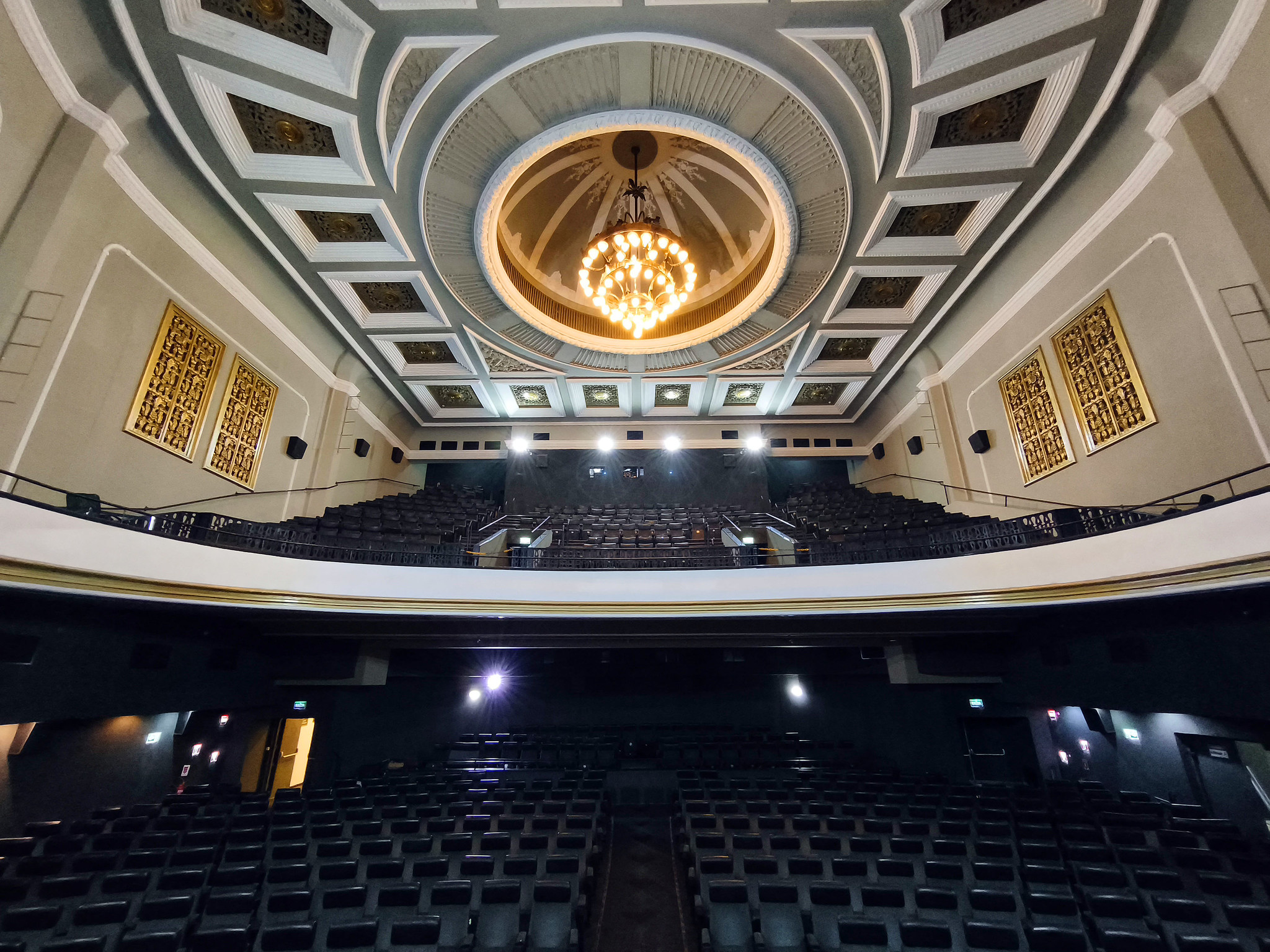
The Reviver Cinema program reopens the Odeon cinema in Cinelândia.
October 5th, 2026
The city of Rio de Janeiro generated 13 formal jobs in August.
October 5th, 2026Rio operates with weekday bus fleet this Sunday of the election.
October 4th, 2026