Category:
Municipal Force trains over 300 agents to reinforce policing on the streets of Rio.
Published on 01/10/2026 - 13:10 | Updated on 02/10/2026 - 13:32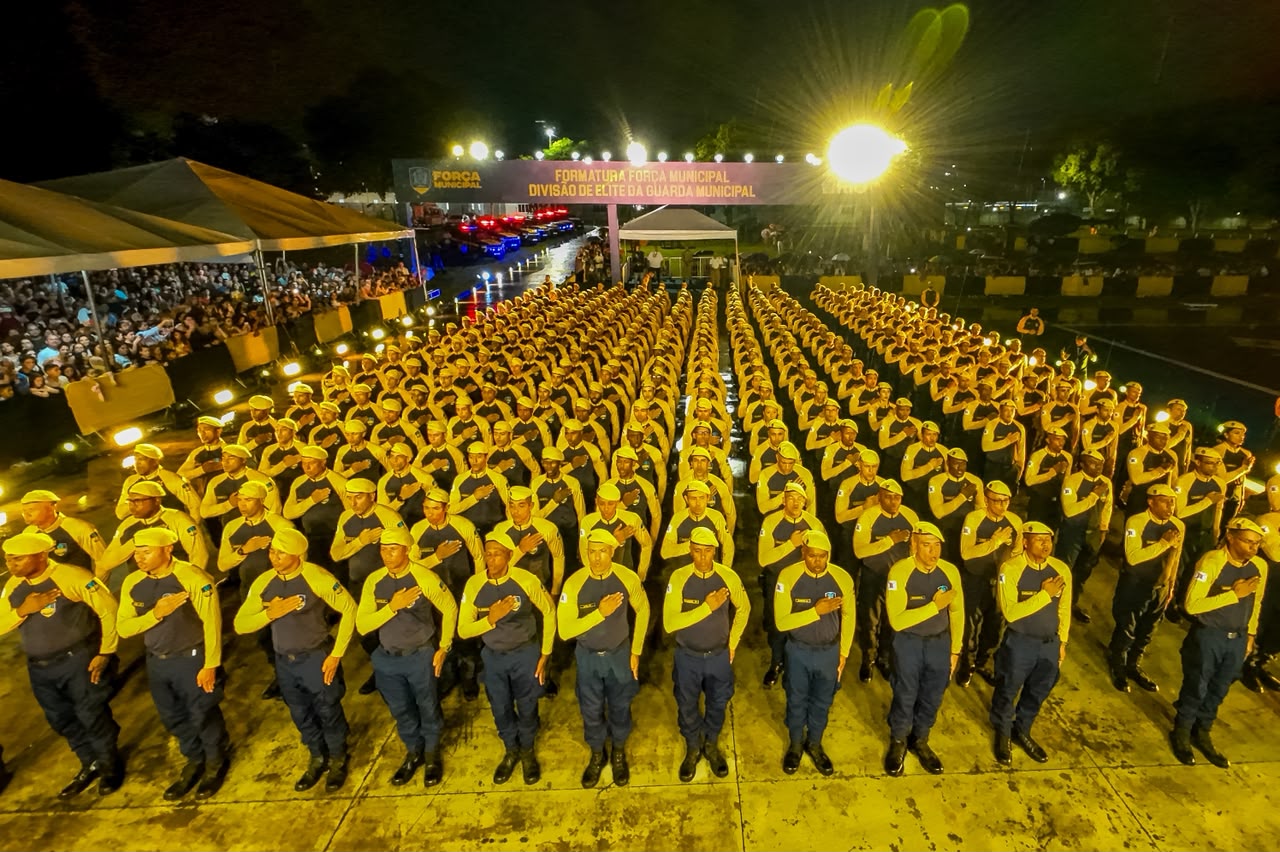 The Elite Division now has over 900 agents to operate in locations and times with a high incidence of robberies and thefts. Photo: Vitor Hugo Cruz
The Rio de Janeiro City Hall held, this Wednesday (September 30th), the graduation ceremony for more than 300 agents of the Elite Division of the GM-Rio – Municipal Force. The ceremony took place at the headquarters of the Federal Highway Police (PRF) Superintendency, in Irajá, in the North Zone of the city.
The new class joins the first 600 trained officers, who have already been working on the streets for just over six months. With the expansion of the force, the Division now has more than 900 officers to carry out visible and preventive policing in locations and times with a high incidence of robberies and thefts.
– The Municipal Force has become an example of a well-trained municipal guard. They are well-trained, well-equipped, and well-oriented agents. They know exactly what to do in the areas with the highest incidence of robberies and thefts in the city. The Elite Division of the Rio Municipal Guard is an institution that will function for the next 100 years. – stated the mayor of Rio de Janeiro, Eduardo Cavaliere.
The mayor assured that the force will continue to improve even further to make the city safer:
"We will continue to evolve, with a very clear goal: to make Rio safer. To improve the situation for the citizen and worsen the situation for the criminal," the mayor concluded.
All graduates are career municipal guards, selected through an internal selection process and trained by the Federal Highway Police (PRF) and the National Secretariat of Public Security (Senasp) in subjects such as Differentiated Use of Force, Police Defense Techniques, Weapons, Ammunition and Shooting, among others.
"These 300 agents will be on the streets by the end of the year and will certainly contribute even more to public safety, which is a fundamental function, and the city government has been taking on this leading role in Rio de Janeiro. And it has been delivering fundamental results for the population," highlighted Brenno Carnevale, Secretary of Urban Security.
The ceremony was also attended by the state secretary of the Institutional Security Office, Roberto Leão, the municipal secretary of the Civil House, Leandro Matieli, the director-general of the Municipal Force, Aimée de La Torre, among other authorities in the area of public security and municipal administration.
The policing model adopted by the Municipal Force on the streets is defined based on the analysis of robbery and theft indicators and the characteristics of each territory. The strategy allows the force to be directed to locations and times of high operational demand.
Currently, the Municipal Force is present in 14 perimeters, distributed across different regions of the city. These are: Bus Station x Gentileza Terminal x Leopoldina Station; Jardim de Alah; Avenida Presidente Vargas x Central do Brasil x Campo de Santana x Cinelândia; Tijuca, between São Francisco Xavier and Afonso Pena stations; Méier x Cachambi; Praia de Botafogo x Rua Marquês de Abrantes; Botafogo Metro x Rua São Clemente x Rua Voluntários da Pátria; Rua Lauro Müller x Avenida General Severiano x Avenida Venceslau Brás; Avenida Ayrton Senna x Avenida das Américas; Jardim Oceânico x Praça do Ó; Bangu, between the pedestrian mall and Bangu Shopping; Campo Grande, between the train station and the pedestrian mall; Freguesia x Jacarepaguá; and Santa Cruz.
Reduction in operational indicators and results.
In the first six months of operation, the Municipal Force recorded a reduction in robbery and theft rates in all areas covered by the Elite Division. Data from the Institute of Public Security (ISP) indicate decreases of up to 73,10% in the registration of these crimes in areas where agents act preventively and proactively. The numbers consider a comparison of robbery and theft records of cell phones and pedestrians during the same periods of 2025 and 2026, corresponding to the operating hours of the GM-Rio Elite Division in each area. The data is partial and has not yet been fully compiled by the ISP.
Among the highlights are the Botafogo Metro area, with a reduction of 73,10%; Freguesia and Jacarepaguá, with 71,40%; and the stretch between Rua Lauro Müller and Avenida General Severiano and Avenida Venceslau Brás, also in Botafogo, with 65,30%. Reductions of 62,40% were also recorded in the area of the Bus Station, Gentileza Terminal and Leopoldina Station, in the central region of the city, and of 43,60% in the area of Avenida Presidente Vargas, Central do Brasil, Campo de Santana and Cinelândia, among other perimeters.
Since the start of operations on March 15, agents have conducted more than 15.500 stops, resulting in 1.367 arrests and detentions. The actions also led to the recovery and seizure of 360 cell phones and 271 motorcycles, as well as the seizure of a pistol, 25 replica firearms, and 73 bladed weapons, and the execution of 33 arrest warrants.
News
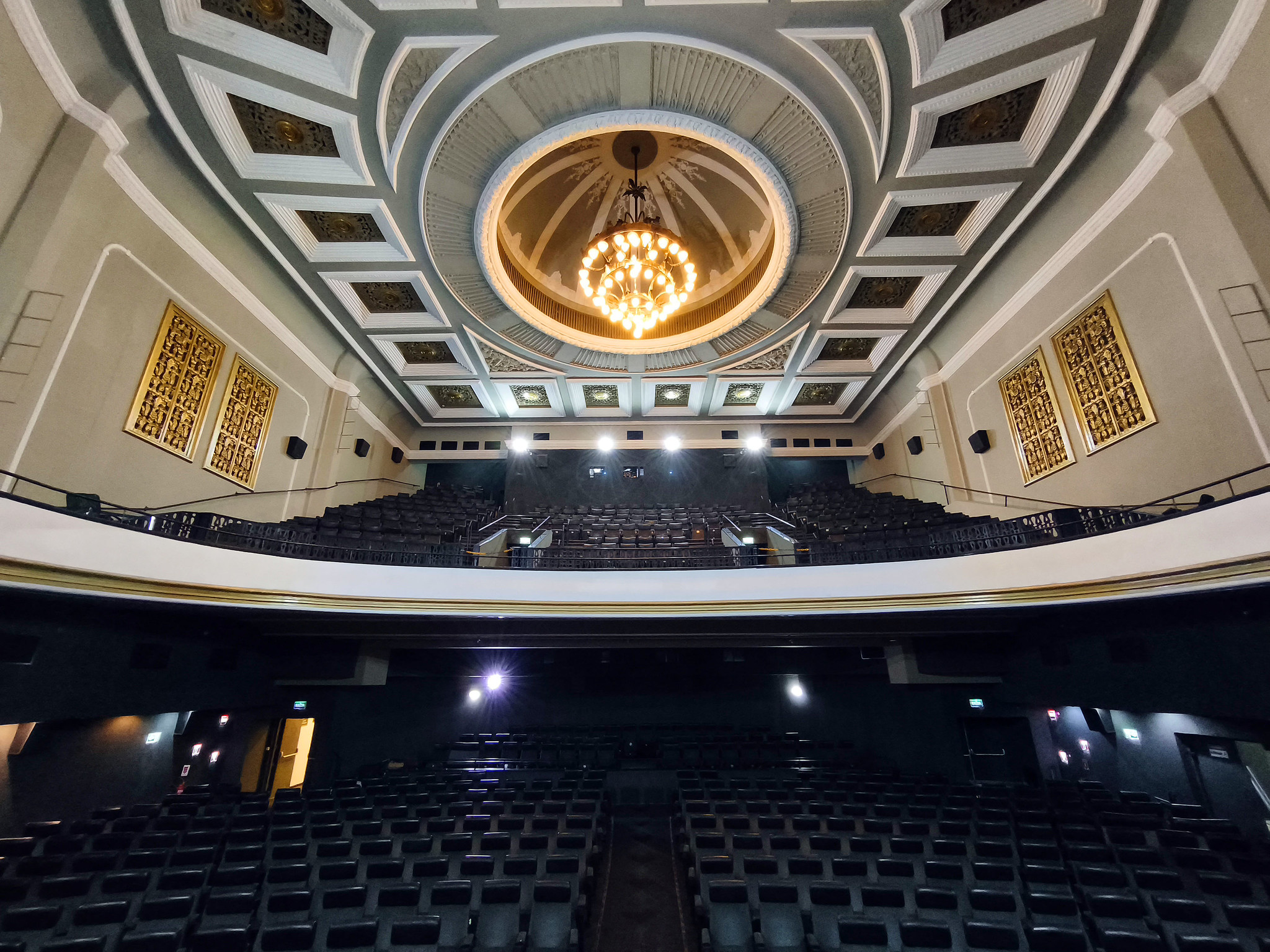
The Reviver Cinema program reopens the Odeon cinema in Cinelândia.
October 5th, 2026
The city of Rio de Janeiro generated 13 formal jobs in August.
October 5th, 2026Rio operates with weekday bus fleet this Sunday of the election.
October 4th, 2026
City Hall announces works to combat flooding in downtown Campo Grande.
October 3th, 2026