





Category:
Lona Cultural Municipal Terra Guadalupe reopens with Deborah Colker in a presentation of 'Dog without feathers' and chat
Published on 12/07/2021 - 15:55 | Updated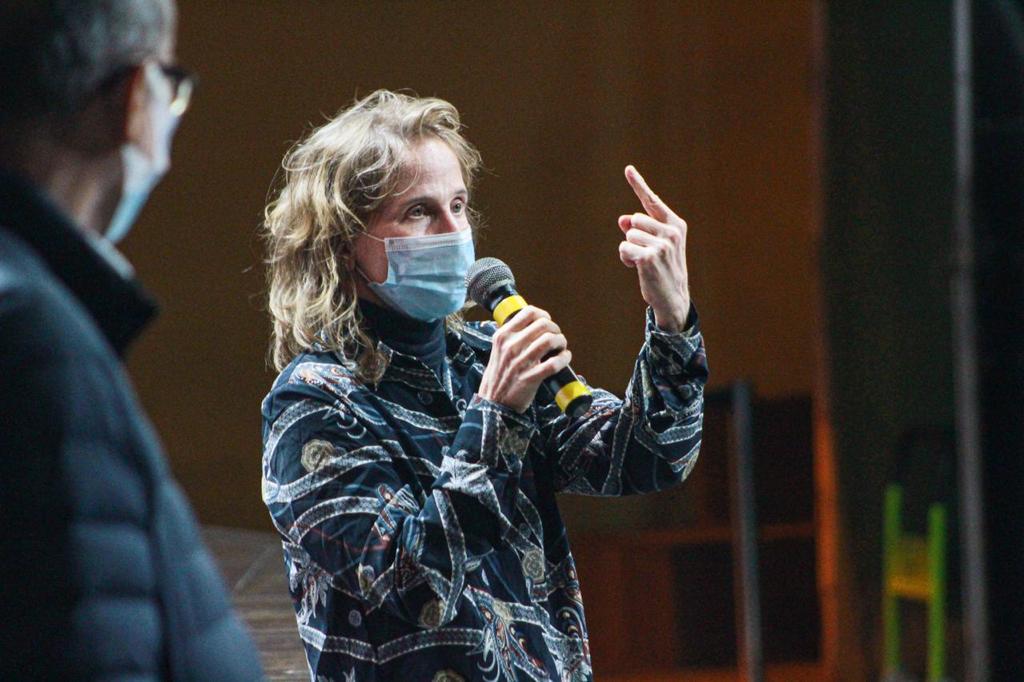 Performance is the artist's first with an explicitly Brazilian theme - Disclosure/City Hall
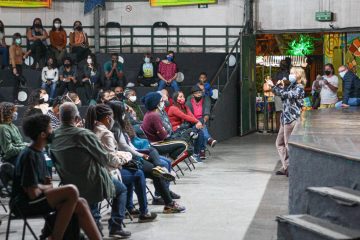
Marking the reopening of the Terra Guadalupe Municipal Cultural Center, in the North Zone, director and choreographer Deborah Colker presented, in a video, her “Cão sem plumas” (Cow without feathers) (2017) – voted best show in Russia – and participated in a chat with around 120 people on Thursday night (8). The performance is the artist’s first with an explicitly Brazilian theme, based on the homonymous poem by João Cabral de Melo Neto (1920-1999), released in 1950.
– Every artist has to go where the people are' (by Milton Nascimento) is the verse of my life. I had never been to Guadalupe, a unique opportunity to present my work to more people. Dance is so powerful that it interacts with all the arts, including literature – said Deborah. – I love the audience, whether there are five or five million. I dance the same way.
Municipal Secretary of Culture Marcus Faustini was present, along with the team that manages the cultural facility, created in 2000 and built with the support of the Associação Cultural Amigos do Sanhaço. The name was a tribute to the title of a song by Caetano Veloso.
– In January, when we took over, we found the tarps in a precarious state. This beginning of the year has been very difficult, but we are taking care so that the culture of Rio de Janeiro can be reborn. The main thing now is vaccination, after that, I am sure, it will happen – commented Faustini.
One of those present at the meeting, graffiti artist and visual artist Rodrigo Sini (@rodrigosini), 39, from the Ricardo de Albuquerque neighborhood, had one more reason to return to the Terra canvas. It is the first time he has seen a show by Deborah Colker.
– If today I have a degree in Fine Arts from UFRJ, it is thanks to this equipment, because it was here that I took the preparatory course for the university entrance exam, in 2009 – said the artist, who creates, in his studio at home, drawings and paintings from photographs of black children, using instruments such as pens and watercolors.
– I believe that only art, culture and education can combat violence.
Another newcomer to Deborah Colker, dancer and dance teacher Ingrid França (ingrid.francca), 20, from Guadalupe, was there with her colleagues from the Priscila Ferraz Dance Institute and left with one certainty:
– I chose the right profession and I intend, who knows, one day, to audition for her company.
After the screening, one of the participants made an observation that caught everyone’s attention: “It became clear to me that João Cabral talks about human misery, about unacceptable things. ‘Cão sem plumas’ is the river without life, without shine. It is part of the third modernist phase, of the generation of 45.”
– Culture generates jobs, boosts the economy and feeds the artistic class. The idea is to show this side of the dancer, who dances all the time, every day. The body is attentive to every movement – highlighted Deborah Colker.
Since 2018, the choreographer has been preparing for the premiere of “Cura,” her newest show, based on the meeting of faith and science, “nothing to do with the coronavirus,” as she says. The launch was initially scheduled for January 2021, in London, if it weren’t for a pandemic getting in the way.
– Part of my life experience is that I have an 11-year-old grandson who was born with an incurable disease, which caused me a lot of indignation.
'Dog Without Feathers', by Deborah Colker
This poem, in particular, is about the Capibaribe River, the river of capybaras that runs through the state of Pernambuco, where the author was born. We need rivers, which are good for cities. A current poem because it addresses tragedies and miseries in nature. It talks about an animal man, a crab. Since I am a person who dances, I had to discover this man's body. It is very hard to work under the hot sun. With punished, sore, resistant skin. The skin of Brazil.
We filmed the scenes in Pernambuco in 25 days, with the approval of filmmaker Cláudio Assis. It took us three years and three months to make the entire show. Time is very important because it makes you change your mind. There are 13 dancers on stage, seven women and six men. I was married to a photographer, the father of my children, who introduced me to João Cabral and the word grosso. I never forgot it.