





Category:
Rio City Hall expands CIVITAS, which will have 20 cameras by 2028
Published on 10/07/2025 - 11:39 | Updated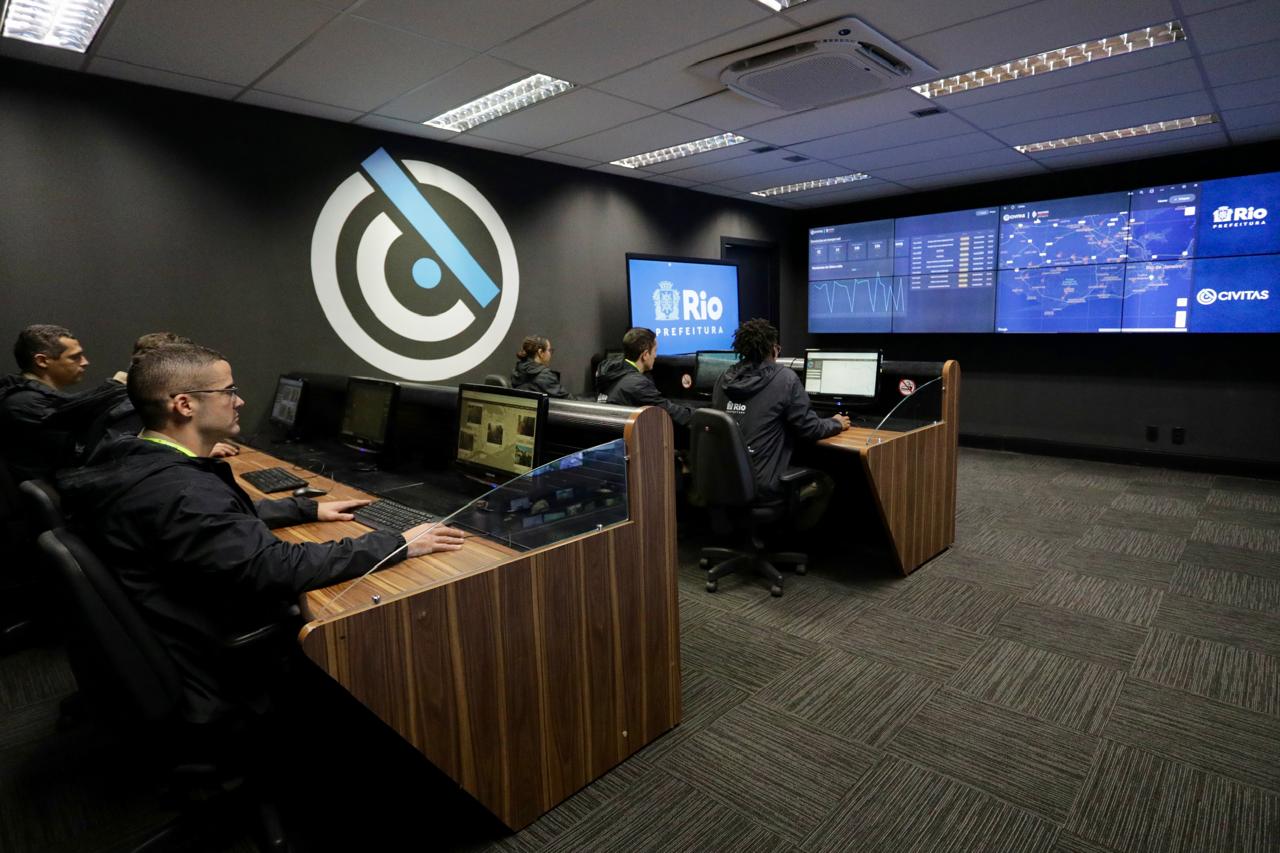 Rio is the only Brazilian city to receive an award and the only one in Latin America recognized for its public safety - Photo: Beth Santos
Rio de Janeiro City Hall announced this Thursday (July 10th) the expansion of CIVITAS (Center for Intelligence, Surveillance, and Technology in Support of Public Security). The city will have 07 smart cameras by 20, making the center the largest urban technology surveillance system in the country. The expansion project takes into account technical criteria defined in partnership with law enforcement: areas with high demand for police reinforcement, crime hotspots, and technologically vulnerable zones.
"This is management, science, and technology applied to combating crime. It's crucial to emphasize that first word: management. Without planning, focus, and clear objectives, it's impossible to combat crime. With these measures, we will implement, in Rio, the largest intelligence, surveillance, and technology center for combating crime in all of Brazil," declared Mayor Eduardo Paes.
In addition to increased coverage, the city will have "Digital Borders," which will make it impossible to enter and leave the city undetected. There will be a total of 56 more rigorous urban control portals in strategic areas and on the city limits, which will automatically identify cloned license plates, unusual movements of cars and people, and suspicious vehicles in real time. Monitoring is guided by patterns and behaviors, using artificial intelligence to cross-reference data in real time.
"All blind spots and major roads in the city will be covered. The cameras will feature facial recognition, vehicle identification, and other features that will make CIVITAS's work not only supporting law enforcement but also providing much more effective prevention," Paes emphasized.
At the heart of the new system is IRIS artificial intelligence. It's a new tool developed by Rio City Hall that will cross-reference information from different databases, detect suspicious behavior, recognize faces, generate heat maps, and streamline complex investigations in just 10 seconds. IRIS will perform personalized connections and cross-references of complex data in a single click. The system analyzes data from smart cameras and delivers the patterns, similarities, and differences of each of the images under investigation.
"By using artificial intelligence, mathematical models, and an integrated system, we will streamline CIVITAS's capabilities. We will be able to support security forces much more quickly and efficiently," stated Deputy Mayor Eduardo Cavaliere.
IRIS allows you to anticipate potential risk situations based on previous patterns. It identifies when and where a particular type of crime is most likely to occur, cross-referencing information such as time, location, type of incident, and the behavior of those involved. It's a predictive analytics system that allows you to define security reinforcements for specific areas. In other words, instead of simply reacting, the city begins to act, think, and plan, based on concrete data and artificial intelligence.
IRIS also utilizes technologies such as computer vision and heat maps. Computer vision allows the system to "see" more than just images. It recognizes suspicious behavior, identifies faces, reads license plates even with incomplete characters, and detects crowds or unusual movements. Heat maps visually organize the collected data, showing in real time the areas with the highest concentration of incidents, suspicious individuals, or risk patterns, functioning as an urban alert radar.
Behind this technology lies applied science. With a multidisciplinary team of mathematicians, physicists, and geographers, CIVITAS uses data from diverse sources, such as the Disque Denúncia (Complaint Hotline), Central 1746, the Fogo Cruzado Institute, a municipal data lake with data from 20 departments, smart cameras, and networks, to develop a range of features that promote public safety.
"What we do here is transform data into action. CIVITAS is a structure designed to support, with precision and agility, public safety decisions at all levels. We are now entering an even more robust phase, with more technology, more intelligence, and greater integration. CIVITAS is data, intelligence, and technology at the service of Rio de Janeiro," said Davi Carreiro, CIVITAS's chief executive.
The new CIVITAS Situation Room will be larger and more modern. The center will remain in the Operations and Resilience Center (COR), but will utilize the room that was built specifically for the city to host the G20 events—the group of the world's largest economies—last year.
Since its creation in June 2024, CIVITAS has worked closely with law enforcement agencies, the justice system, and municipal, state, and federal operational agencies. With a robust data ecosystem, the center can track suspicious vehicles, detect traffic patterns, identify license plates with missing or altered characters, and cross-reference seemingly disparate incidents.
CIVITAS excels in supporting public safety with technology and real-time analysis.
CIVITAS in numbers (July 2025):
– 160 alerts issued in real time
– 6,1 million daily license plate readings
– Over 2 inquiries, cases and operations support
– 20 departments with data in the Data Lake