Category:
Milan Pact: Hortas Cariocas program promotes planting with representatives from different continents
Published on 20/10/2022 - 11:09 | Updated on 20/10/2022 - 11:11 The representatives participated in the planting of fruit species in the space that was renamed Pomar Pacto de Milão - Disclosure
After the closing of the 8th Milan Pact Global Forum, which was held for the first time in Rio de Janeiro, the delegation, with representatives from different countries, visited the Dirce Teixeira vegetable garden in Jardim Anil, one of the gardens with the largest production of the Hortas Cariocas program, coordinated by the Municipal Secretariat for the Environment and Climate (SMAC). In total, there are 56 gardens spread throughout the city.
At the event, which was supported by the Jacarepaguá Subprefecture, the delegation visited the entire space, with flowerbeds and greenhouses, which is part of an agroforestry system that benefits hundreds of families in the region. The representatives also participated in the planting of fruit species, such as pitanga, araça, guava, jambo and gabiroba, in the space that has been renamed Pomar Pacto de Milão.
The deputy mayor and secretary of SMAC, Nilton Caldeira, highlighted the delegation's visit and the importance of the program, which is undergoing renewal.
– It is an honor to welcome representatives from all over the world to one of our 56 gardens. Showcasing the work of the program, which has already reached the mark of 1 tons in organic food production, is of great importance for the city and for other countries. From now on, Hortas Cariocas is entering a new phase, with new procedures and projects to increasingly strengthen production and benefit more Cariocas.
More than 60 representatives from different countries, such as Indonesia, Philippines, Cape Verde, Mozambique, Italy, Mexico, France, Germany, England and the USA participated in the visit.
– The most interesting thing is to show the integration between native forests and agroecological production, strengthening environmental education, in addition to promoting interaction between residents and nature and contributing to food security – said the new program manager, Diogo Caprio.
Rio City Hall holds closing event for the 8th Global Forum of the Milan Pact for Urban Food Policy
The deputy mayor of Jacarepaguá, Talita Galhardo, also accompanied the visit and highlighted the quality of the food, which contributes to the good health of residents.
– The work of Hortas Cariocas contributes significantly to improving the health of the population. We have also noticed that the program helps reduce the rate of malnutrition and vitamin and mineral deficiencies. The issue of food security has always been on our agenda. Another important point is the increase in the family income of those involved. The integration of urban people with rural production brings enrichment to society. It is a joy to have such a well-kept vegetable garden here in our region.
Program has already benefited around 60 thousand families in social vulnerability
Created in 2006 with the goal of reducing food insecurity among families living in socially vulnerable areas and creating jobs, generating income and keeping young people away from crime, the Hortas Cariocas program is currently present in 56 locations in the city, including 29 communities and 27 schools in the municipal education system. The program also aims to encourage the fight against food waste, curb the illegal occupation of fragile areas, create spaces for coexistence and train Rio residents in entrepreneurial management.
Over the course of 16 years, the program has produced around 1 tons of food, benefiting around 60 families. Of the total production, 50% was distributed to residents of the communities involved and the other half was sold to purchase inputs, thus demonstrating its self-management. The program has received three awards, including two international awards: the Sustainable Entrepreneur Award (2015), an honorable mention in the Milan Pact in the Food Production category (2019), and was included by the UN in the list of essential actions to achieve the Sustainable Development Goals (SDGs).
It is also worth remembering that the city is moving towards having the largest urban garden in the world, with an area equivalent to 15 football fields. Today, the garden in Parque Madureira Mestre Monarco already has 55 productive beds and another 95 under development. Its expansion is expected to be completed in 2024.
News
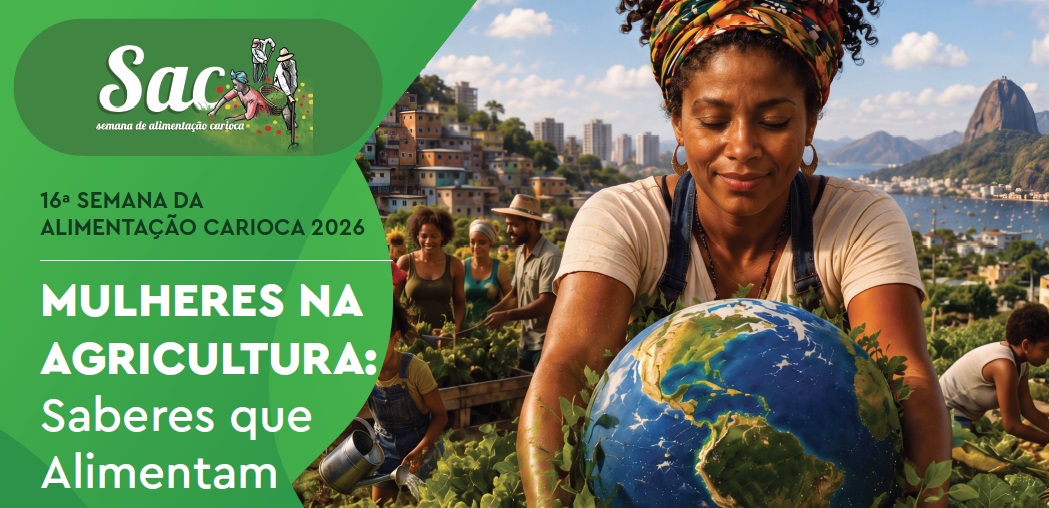
The Carioca Food Week is coming – SAC Rio 2026: see the schedule.
October 8th, 2026CET-Rio announces the scheduled road closures for this Thursday (8/10)
October 8th, 2026