Category:
Rio City Hall begins census of the homeless population to formulate public policies and reinsert people into the job market
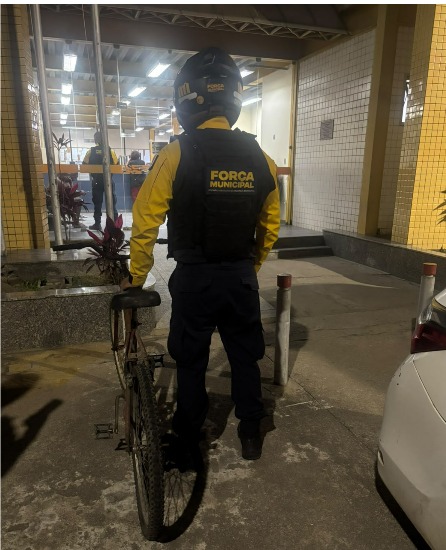
Published on 26/10/2020 - 18:06 | Updated on 27/10/2020 - 13:28 Based on the data, the Municipality hopes to bring together the Justice Department, the Public Prosecutor's Office and the Public Defender's Office in joint actions to provide working conditions and income. Photo: Nelson Perez/City Hall
The Rio de Janeiro City Hall, through the Municipal Department of Social Welfare and Human Rights (SMASDH) and the Pereira Passos Institute (IPP), in collaboration with the Municipal Health Department (SMS), began a census of the city's homeless population on Monday (October 26). The survey will be conducted over four days, until Thursday (October 10). The goal of the survey is to determine how many people live on the streets and what their profile is. The data will contribute to the formulation and implementation of public policies that help provide dignity and job opportunities to this population.
With the census, the City Hall hopes to raise awareness in the Justice Department, Public Ministry and Public Defender's Office so that, together with the Municipality, they can develop actions to reinsert these people into the job market.
– We were unable to involuntarily hospitalize the homeless population during this pandemic period because the courts did not allow it. With the increase in the homeless population and the pandemic, this need is becoming more pressing. With this census, we want to show this: how many people are homeless. In addition to having municipal shelters available, we are able to train the workforce and guarantee employment. Because there is a law in the city of Rio that determines that 5% of the workforce of all companies that work for the City Hall must be people who came from the streets and were trained. We hope that the census will provide good arguments so that we can reinsert this homeless population into the city's economic life – said Mayor Marcelo Crivella.
How will data collection be carried out?
The 135 census takers will travel throughout the city, administering questionnaires to the homeless population and to people receiving care in shelters. The focus of the survey is to collect information on age, race, gender, education, employment and income, history of living on the streets, assessment of shelters, health and drug use, and access to and assessment of assistance services. The census is scheduled to be carried out every two years, and the tool for collecting and analyzing data allows for ongoing updates, due to the dynamic and fluctuating nature of the homeless population.
To ensure full coverage of the entire municipality – one of the biggest challenges of the census – the city was divided into four census districts, where the survey will be conducted in three shifts: morning, afternoon and evening. In addition, to avoid double counting, the teams will cross-reference the information obtained through identification questions.
– The census will give us a breakdown of people who live on the streets and others who use the streets to access some type of income. Because there is a difference between the homeless population and the population on the streets. And this will be important for planning and implementing public policies for this population – said the municipal secretary of Social Welfare and Human Rights, Tia Ju.
The census takers' work will always be carried out from 7 am to midnight. Thus divided, by region: on Monday (24/26), West Zone; on Tuesday (10/27), Center; on Wednesday (10/28), South Zone; and on Thursday (10/29), North Zone.
The president of the IPP, Paulo Cesar Amendola, highlighted the importance of the census being carried out every two years.
– This methodology is fundamental for monitoring public policies that will be implemented to serve this population – he explained.
Who does the census?
The fieldwork is carried out by the Qualitest institution, winner of the bid made by the IPP and responsible for carrying out a similar census in the city of São Paulo, in 2019.
The census was originally scheduled for March of this year, but had to be postponed due to the COVID-19 pandemic. Data collected from other surveys will not be taken into account, due to the use of different methodologies, which prevents the information from being compared.