





Category:
Milan Pact, global forum that discusses urban food policy, begins in the city of Rio
Published on 17/10/2022 - 14:44 | Updated on 17/10/2022 - 22:19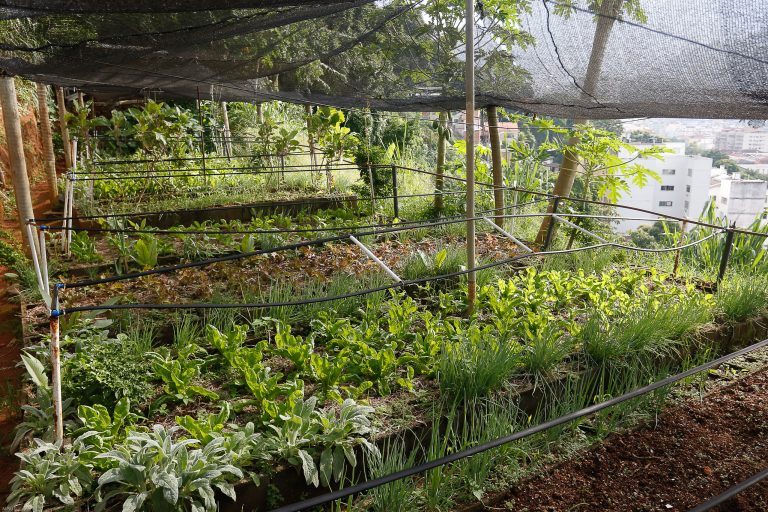 Welcoming Carioca Garden in Morro da Formiga, in Tijuca - Marcelo Piu / Rio City Hall
Rio de Janeiro Mayor Eduardo Paes participated in the opening of the 17th Milan Pact Global Forum for Urban Food Policy on Monday morning (10/8) at Cidade das Artes in Barra da Tijuca, in the city’s West Zone. The event, sponsored by Rio de Janeiro City Hall, will run until Wednesday (19/10) and will feature over 500 delegates, mayors, and representatives from 162 cities around the world, including Paris, Copenhagen, Chicago, and Washington. They will discuss, in person and virtually, solutions for public policies, food systems, and climate justice. This is the first time the event has been held in South America, and this year’s theme is “Food to Nourish Climate Justice: Urban Food Solutions for a Fairer World.”
– The Milan Pact addresses hunger, but also changes in food production processes. It is an honor for us to host an international event that addresses such an important issue. With Prato Feito Carioca and Cozinhas Comunitárias Cariocas, we are seeking to expand public policy for those in need. And we also have a very important program, Hortas Cariocas, which we are expanding – said Eduardo Paes.
In addition to mayors, city officials, food policy professionals, experts and researchers are meeting in Rio de Janeiro one year after the last meeting in Barcelona. The event will discuss effective solutions and opportunities to combat climate change through food policies and systems.
– On behalf of the City of Milan, I welcome you all to the 8th Milano Pact Global Forum in the beautiful city of Rio de Janeiro. In 2015, we began a journey to build a fairer and more sustainable food system. As politicians, we have a great responsibility to make this vision a reality. As mayors, we turn this vision into concrete actions – said Milan’s Deputy Mayor, Anna Scavuzzo.
The Milan Urban Food Policy Pact, an international agreement between mayors, will be signed during the meeting. More than a declaration, it is a concrete working tool for cities and will list 37 actions, grouped into six categories (Governance, Sustainable Diets and Nutrition, Economic and Social Equity, Food Production, Food Supply and Distribution, and Food Waste), to be implemented as food policies. For each recommended action, specific indicators will be indicated to monitor progress in implementing the Pact.
Of the 162 cities participating in the event, 30 will participate online. The main sessions will be broadcast on the Milan Pact’s digital platforms.
Awards for the best actions
On Monday (17/10), at the end of the first day of the event, there will be an awards ceremony for the winners of the Milan Pact Awards 2022. The awards ceremony will showcase the efforts that member cities are making to achieve the Pacts’ recommendations. The award-winning cities offer concrete examples of food policies implemented within the categories recommended by the Pact.
Rio City Hall in the fight against hunger
Fighting hunger is one of the guidelines of the Rio de Janeiro City Hall, which is developing new public policies and intensifying existing ones. This ranges from providing meals and food vouchers to those most in need to providing vegetable gardens for communities to work in and produce food. In schools, the use of food produced by family farming is growing, as are educational vegetable gardens.
During the 8th Milan Pact Global Forum, food policies developed by the City of Rio, such as Prato Feito Carioca, Cozinhas Comunitárias Cariocas, Hortas Cariocas and Hortas Escolares will also be the subject of debate with peers from other cities around the world. The projects will be presented on the second day of the event (18/10), between 9 am and 11 am, with the presence of the secretariats of Social Welfare, Education and Environment and Climate.
Prato Feito Carioca and Community Kitchens
This year, in July, the City of Rio created the Prato Feito Carioca program, a public policy to produce meals and offer them to the population. Since then, 300 meals have been provided. In addition, the Carioca Community Kitchens were opened, where balanced and safe meals are prepared and provided daily to families in extreme poverty. For informal workers with an income of up to R$210, the City Hall provided 5 Prato Feito Carioca meal cards, which allow them to eat in places close to work.
Carioca vegetable gardens
Hortas Cariocas is a program of the Department of Environment and Climate that aims to reduce food insecurity among families living in socially vulnerable situations, in addition to creating jobs, generating income and keeping young people away from crime. It is present in 56 locations in the city, including 29 communities and 27 schools in the municipal education system. The program also aims to encourage the fight against food waste, curb the illegal occupation of fragile areas, create spaces for coexistence and train Rio residents in entrepreneurial management.
Over the course of 16 years, the program has produced around a thousand tons of food, benefiting more than 60 thousand families. The program has received three awards, including two international awards: the Sustainable Entrepreneur Award (2015), the Milan Pact Award in the Food Production category (2019), and was included by the UN in the list of essential actions to achieve the Sustainable Development Goals (SDGs). Currently, 283 volunteers work in the program, receiving grants ranging from R$500 to R$1.000.
Along the same lines, the city is moving towards having the largest urban garden in the world, with an area equivalent to 15 football fields. Today, the garden in Parque Madureira Mestre Monarco already has 55 productive beds and another 95 under development. Its expansion is expected to be completed in 2024.
School gardens
The School Gardens program operates in 276 schools of the Department of Education. The program proposes the implementation, maintenance and consolidation of educational gardens and gardens in schools as spaces dedicated to environmental practices and involves 130 thousand students. This production encourages healthy eating, promotes better use of school meals and facilitates dialogue between different areas of knowledge related to food security.
The food offered to students enrolled in the municipality's school units is prepared, in part, with organic food, produced by family farmers.
Milan Pact Award 2022 is awarded at a ceremony in the City of Arts
News
CET-Rio announces scheduled road closures for this Monday (October 5th).
October 5th, 2026

The Reviver Cinema program reopens the Odeon cinema in Cinelândia.
October 5th, 2026
The city of Rio de Janeiro generated 13 formal jobs in August.
October 5th, 2026Rio operates with weekday bus fleet this Sunday of the election.
October 4th, 2026