





Category:
City Hall anticipates and presents the new bidding model for the city's bus system
Published on 28/05/2025 - 10:01 | Updated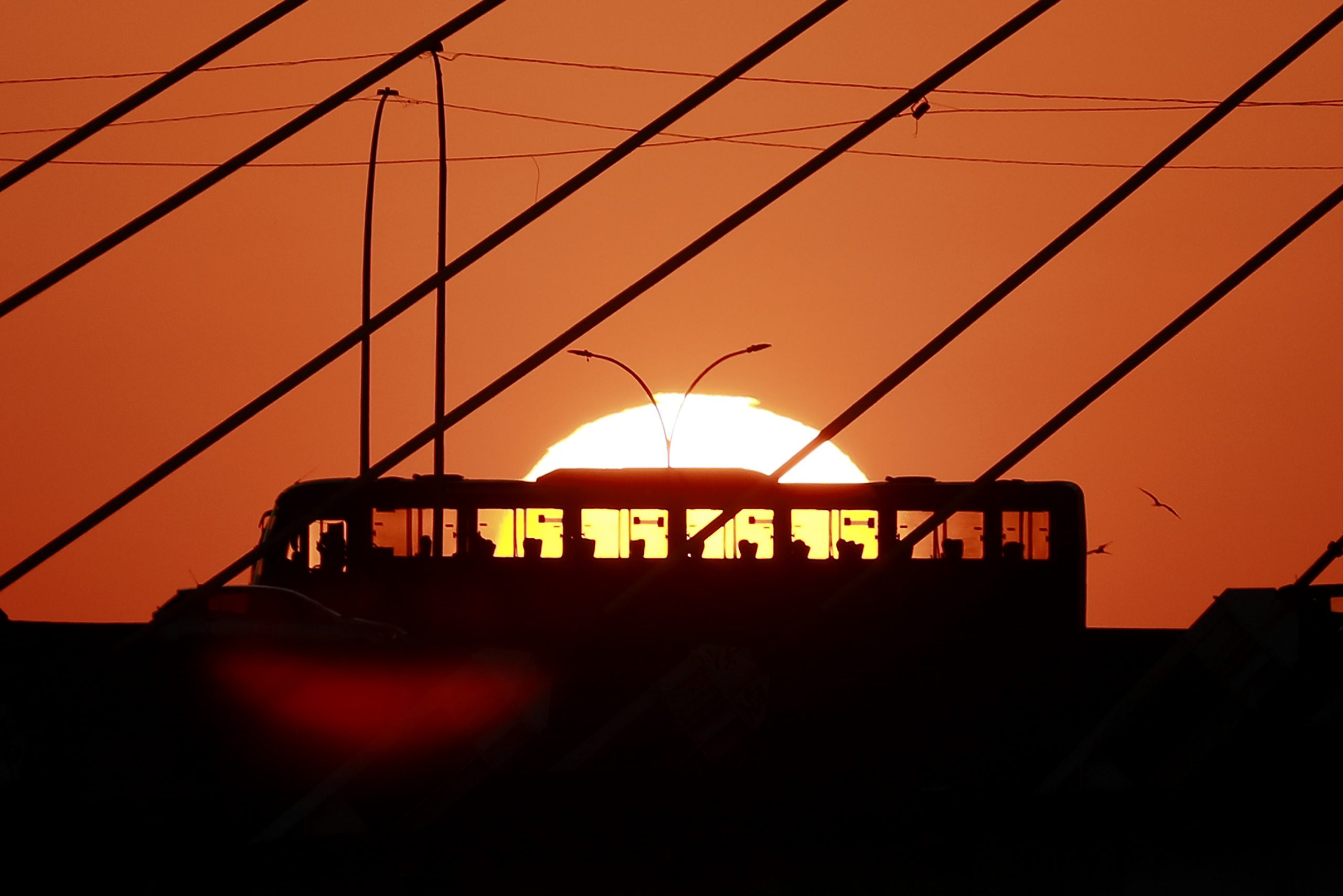 Recovery of the transport mode will begin in the West Zone - Marcos de Paula/City Hall
Rio de Janeiro Mayor Eduardo Paes, Deputy Mayor Eduardo Cavaliere and Municipal Secretary of Transportation Maína Celidonio presented details on Wednesday (May 28) about the new bidding process for the city's bus system, originally scheduled for 05, being brought forward. The bidding process will take place in four phases and will begin in the West Zone. Each phase includes a transition stage, in which the current operators will lose their exclusivity rights and, at the end, a new operator will take over. The action is part of the judicial agreement signed on April 2028 between the City Hall, the State Public Prosecutor's Office and the four consortiums responsible for operating the city's bus lines.
– This is the most important turning point in the history of mobility in the city of Rio, perhaps even more important than the BRT itself. We are talking about a system that has been operating precariously for 60, 70 years and that is now beginning to be transformed with decent and dignified transportation. This is a change that will not happen overnight, but it has a defined timetable and will start to be noticed starting next year – said Mayor Eduardo Paes.
The first phase will run until April 2026, covering the Campo Grande and Santa Cruz lines in the West Zone. In Campo Grande, the number of buses connecting the neighborhood with other regions of the city will increase from 95 to around 180. The number of buses that provide local connections between neighborhoods in the region will increase from 37 to around 200 buses. In Santa Cruz, the fleet that provides local routes will increase from 67 to around 330 buses. The following phases will be organized by region, prioritizing the areas with the worst operational performance.
The full schedule includes:
Phase 1: until April/2026 (Campo Grande and Santa Cruz)
Phase 2: November/2025 to September/2026 (West Zone, Vila Isabel and Ilha do Governador)
Phase 3: April/2026 to April/2027 (West Zone, Barra da Tijuca, Jacarepaguá and North Zone)
Phase 4: November/2026 to November/2027 (West Zone, Barra da Tijuca, Jacarepaguá and North Zone)
Final phase: September/2027 to August/2028 (South Zone and lines in other regions with a good service evaluation index)
The city is currently served by four consortiums: Intersul, Internorte, Transcarioca and Santa Cruz. The new model provides for the division of the city into 31 lots — 22 structural lots and 9 local lots. The structural lots will serve different regions of the city, while the local lots will focus on travel within neighborhoods or between neighboring neighborhoods. The new configuration seeks to expand coverage and make line management more efficient.
– The BRT was an emblematic case of recovery, but today the regular bus system has an even greater impact on the lives of the population, with more than 2 million passengers per day. The change we are promoting in the system is structural, much broader and its effects will be felt progressively. It is a transformation that will generate significant impacts on the lives of those who depend on public transportation in the city — stated Secretary Maína Celidonio.
Transport Quality Index (TQI)
The quality of the operation will be measured quarterly through the Transportation Quality Index (TQI). The indicator takes into account data such as disciplinary infractions, service, passenger satisfaction, average age of the fleet, presence of air conditioning, regularity of trips and operation without penalties. Lines operated by companies with a TQI below 0,8 will lose their exclusivity rights and may be transferred to new operators or managed directly by the City Hall.
New buses
The city government has established new parameters for the fleet. All buses must be new, equipped with air conditioning, low floors, accessibility ramps, sustainable technology and three doors — one for boarding at the front and two for disembarking, in the middle and at the back. These vehicles will be considered public goods at the end of the contracts.
The amounts related to the subsidy deductions, which total more than R$100 million, will be used to purchase new buses that already meet these defined specifications. These vehicles will reinforce the current fleet and will remain in the system after the concessions end.
Improvements after the first court settlement
The first judicial agreement signed in May 2022 between the City Hall, the State Public Prosecutor's Office and operating consortiums resulted in the reorganization of the bus system in the city of Rio, with payment of a subsidy per kilometer, use of technology for monitoring and application of glosses.
Since June 2022, 200 buses have been added to the fleet, 65 lines have been activated or reactivated, 800 of which are night lines, and service has resumed at 19.162 more bus stops, especially in peripheral areas. In the same period, the number of planned trips on weekdays increased from 24.537 to 821.790, and the scheduled mileage increased from 1.054.451 to XNUMX kilometers per weekday.