





Category:
City Hall details how PIX and card payments will work in Rio's municipal bus system.
Published on 25/05/2026 - 11:12 | Updated on 25/05/2026 - 15:00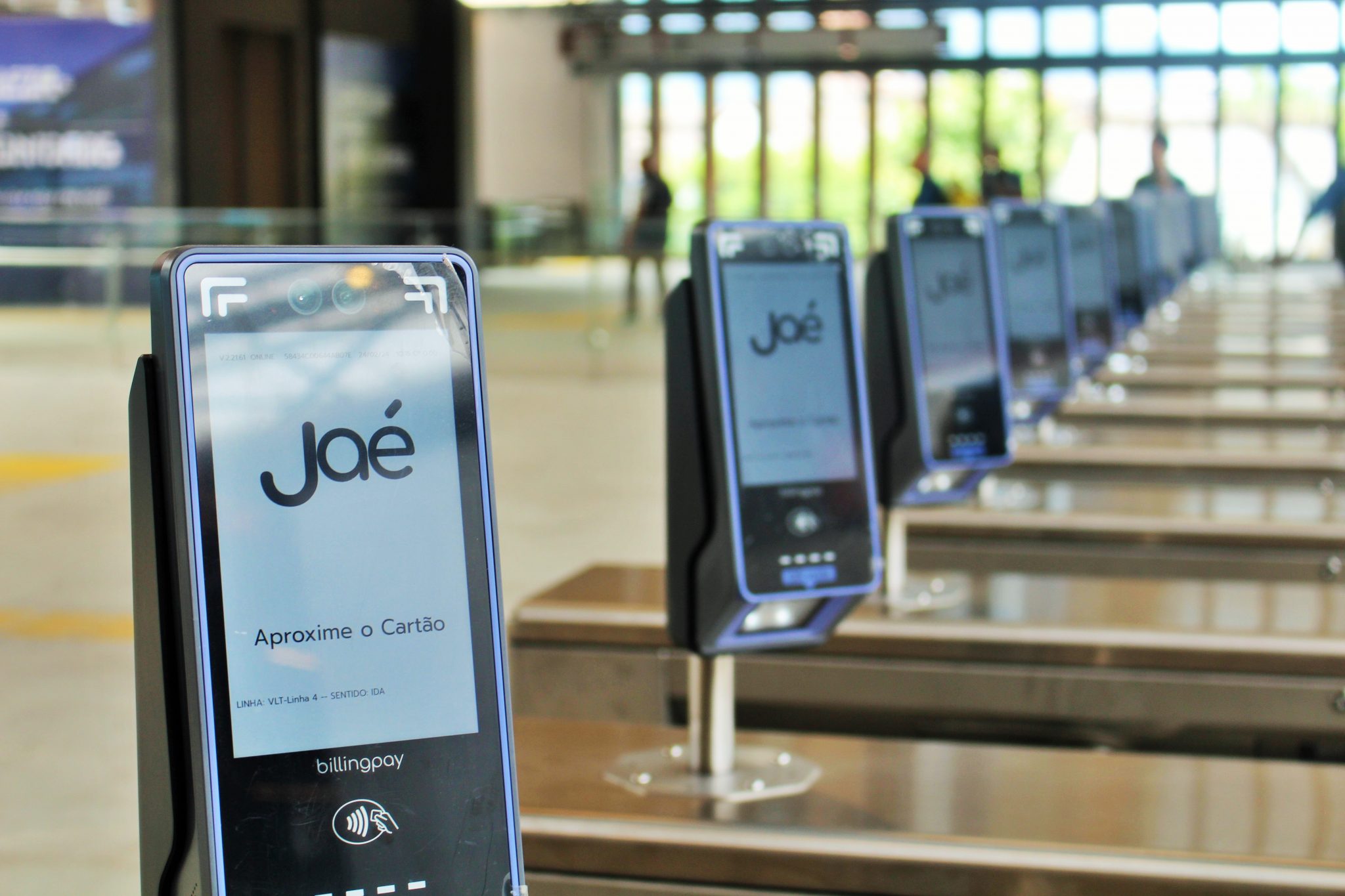 Cash will no longer be accepted on public transport starting May 30th, and Jaé validators will switch to PIX, debit, and credit card payments directly at the turnstiles - Conrado Portella/Rio City Hall
The mayor of Rio, Eduardo Cavaliere, and the municipal secretary of Transportation, Jorge Arraes, detailed, this Monday (May 25th), in a press conference held at the Operations and Resilience Center (COR), how the new payment system for municipal buses will work using PIX and debit and credit cards, integrated with the Jaé validators. From May 30th, cash will no longer be accepted on municipal transport.
"This is an advancement of the system, based on the control of public ticketing by the Rio de Janeiro City Hall. This was one of the greatest achievements for the population in recent years and what allowed us to transform the BRT and advance in the renewal of municipal buses. Today, data shows that 95% of passengers already use a card or app to pay for their fare. This gives us the security to restrict the circulation of cash inside buses, while maintaining the possibility of purchasing and recharging cards with cash at ticket offices, ATMs (self-service machines), and also at new points of sale, such as newsstands," stated Mayor Eduardo Cavaliere.
Payment via PIX directly on Jaé validators will also be implemented in stages: testing begins on some buses on Tuesday (May 26), with gradual expansion until it is available to the entire fleet throughout June. Payments with debit and credit cards will be in the testing phase until June 15, with progressive expansion until the end of the month, when the functionality should be available on all municipal buses.
This measure is part of the process of modernizing the municipal ticketing system and seeks to increase security on public transport, speed up passenger boarding, eliminate the dual role of drivers, and increase transparency regarding fare collection and the use of public subsidies.
Cash is still accepted for purchases and card top-ups.
The City Hall emphasized that cash will continue to be accepted for purchasing and recharging Jaé cards. Currently, the system has approximately 1.090 physical cash recharge points, including 750 accredited points in commercial establishments, 250 self-service machines (ATMs) installed in BRT, VLT, metro and airport stations, in addition to 90 BRT system ticket offices.
With the expansion of the network, the city will have approximately 2.000 physical points of sale and/or recharge for the Jaé mobile phone card. The complete list of service points is available [here/at this link]. available on the Jaé website.
Starting this Tuesday (May 26th), the single-use green card, loaded for one trip, will begin to be sold gradually at more than 700 newsstands throughout the city. The card will have an initial value of R$ 10, with R$ 5 for the card itself and R$ 5 for the fare. After use, the passenger can recharge the card normally or request a refund of the card's value.
Fare integration will be restricted to the black card and the app.
The Rio de Janeiro City Hall also confirmed that, starting May 30th, only the black Jaé card, linked to the user's CPF (Brazilian tax identification number), and the system's app will allow fare integrations between the Bilhete Único Carioca (BUC) and the Bilhete Único Margaridas (BUM). The green card will no longer offer fare integration.
Currently, the Bilhete Único Carioca (Rio de Janeiro's integrated transport ticket) allows passengers to make up to three trips within a three-hour period, one of which must be on the BRT (Bus Rapid Transit), paying only one fare of R$ 5.
The Metropolitan Single Ticket allows up to four trips between BRT, VLT and municipal buses within 20 hours, also with municipal integration at a cost of R$ 5.
The change is already impacting passenger behavior.
Data presented by the City Hall shows that the population has already begun to migrate to digital payment methods after the announcement of the changes to the system. In the first week after the measures were announced, Jaé registered a 300% increase in new registrations, with a peak of 12 registrations in a single day and an average of 7 new users daily.
During the same period, there was a 20% reduction in cash payments on buses, causing cash use to drop to about 5% of trips. Before the announcement, the average was 9%.
The City Hall also identified a 20% drop in the use of integrated fares via the green card and a 19% reduction in top-ups for this card, indicating a growing migration of passengers to the black, identified card linked to the user's CPF (Brazilian taxpayer ID).
Currently, around 95% of fares on the municipal transportation system are paid without using cash.
More security and an end to dual functions.
The City Hall also presented the results of the operation of line 634 (Bananal x Saens Peña), which completed its first five working days without cash payments, without any reported disruptions or complaints from passengers, and with a 20% reduction in travel time. During this period, the line recorded a daily average of 9.733 passengers, with 9.403 boardings made using the Jaé system and 330 using the RioCard (Intermunicipal Single Ticket).
During the press conference, Secretary Jorge Arraes highlighted that the gradual removal of cash from buses also brings important operational gains to the system.
"The measure increases safety on public transport, reduces the risk of robberies, speeds up boarding, and eliminates the dual role of drivers. Furthermore, it improves the operational and financial control of the system and increases the transparency of fare collection," he explained.
News

The Carioca Food Week is coming – SAC Rio 2026: see the schedule.
October 8th, 2026CET-Rio announces the scheduled road closures for this Thursday (8/10)
October 8th, 2026